

What is Big Bag Sewing Machines
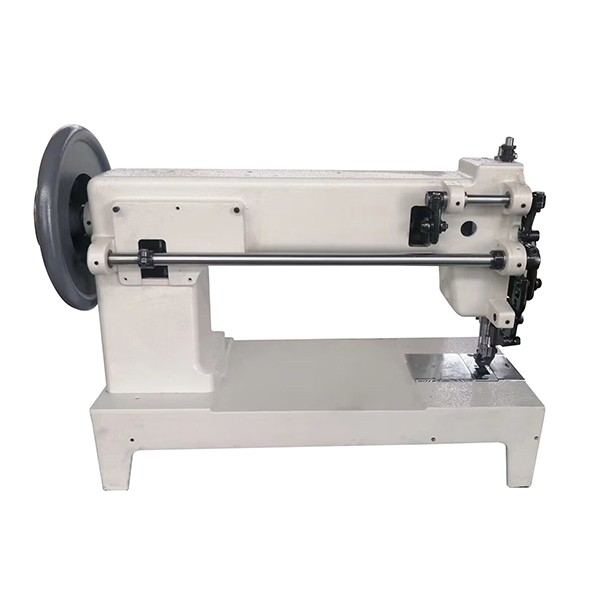
A bag sewing machine is advance technology equipment designed to deal with heavier workload due to incorporation of ergonomic features. One of its major functions is to sew bags with diverse nature so the material present inside can be protected from external environment and waste.
Advantages of Big Bag Sewing Machines
High efficiency: One of the greatest advantages is their high efficiency. These machines are capable of continuous, uninterrupted sewing operations, greatly improving production efficiency. Compared to traditional hand sewing or semi-automatic sewing machines, assembly line sewing machines can complete a larger workload in a shorter time period.
Consistency and quality: Jumbo bag sewing machines ensure product consistency and high quality throughout the production process. Due to the precise control of the machines, every bulk bag produced meets the same standards, reducing quality issues caused by human factors.
Labor cost savings: By utilizing sewing machines, enterprises can reduce their reliance on skilled workers, thereby saving on labor costs. These machines have a high degree of automation and are easy to operate, allowing even inexperienced workers to quickly become proficient.
Flexibility: The sewing machines are typically designed with excellent flexibility, capable of adjusting to different production requirements. Whether sewing bulk bags of varying sizes or switching sewing modes, the machines can adapt quickly to meet diverse production needs.
Durability and low maintenance costs: High-quality bulk bag sewing machines are usually highly durable, able to withstand prolonged continuous operation. At the same time, these machines are designed with ease of maintenance in mind, resulting in relatively low maintenance costs and enabling enterprises to use them stably over the long term.

GC1541SL-18 Long Arm Big Bag Lockstitch Sewing Machine

GC1541SD-7 Big Bag Sewing Machine With Auto Thread Trimmer
-
GC1541S-D Direct Drive Big Bag Sewing Machine

GC1541S Big Bag Lockstitch Sewing Machine

GC1510DL-18-7 18"big Bag Lockstitch Sewing Machine with Thread Trimmer


GC1510L-14 14 inch long arm big bag lockstitch sewing machine

GC1510L-14 14 inch long arm big bag lockstitch sewing machine

GC1510D Direct Drive Big Bag Sewing Machine


GA3670 Big Bag Lockstitch Sewing Machine

GA2570L-25 Long Arm Big Bag Lockstitch Sewing Machine

GA2570 Big Bag Lockstitch Sewing Machine

GA9800 Heavy Duty Big Bag Lockstitch Sewing Machine

GB6-180-2 Cylinder-bed sewing machine for repairing big bag

GK82800 Long Arm Q Bag Sewing Machine

GK81800 Long Arm Baffle Bag Sewing Machine

GK80700-CD5 Jumbo Bag Making Machine

GK80700-CD4 Bulk Bag Making Machine

GK80700-CD3 FIBC Bag Making Machine

GK81300-A3 Container Bag Sewing Machine

GK81300-A2 Jumbo Bag Sewing Machine

GK81300-A1 Big Bag Sewing Machine

GK81500B Jumbo Bag Making Machine


Why Choose US
Our factory
Deko Corporation is located in the center of the free trade zone at the national level Hi-tech Zone, Xi'an, China. We mainly dedicate in developing, producing and marketing of PACKSTAR brand big bag, bag sewing & bag closing machines since 1990s, we are one of the world leading suppliers of bag closing and sewing machines in the global market.
Rich experience
For more than 30years, we continuously improve the quality from even one small screw to the whole machine lines and our service, in order to meet our valued customers demand both in domestic and overseas market, improve theirs work efficiency and create the value by joint-efforts.
Our product
Our current main PACKSTAR brand industrial bag sewing and closing machines are as below,
FIBC/jumbo/bulk/big bag making machines
Heat sealing machines(for kraft paper,PP/PE and heavy duty plastic bags)
Auto bag closing systems for filled bags
Bag closing machine heads
Portable bag closing machines
Bag infeed and folding machines
Small bag making machines
Carpet overedging machines
Filter bag sewing machines
Net-rope sewing machines (Fishing nets, sport nets,etc)
Geo-textile sewing machine
Artificial turf sewing machines
Ultrasonic non-woven bag making machines
Our service
Through stable quality and professional services, we have distributors and users in more than 30 countries at present. We always trust all business is based on the people, not only for our own company, but also for all partners. We consistently insist on the principles: "Quality, Service, Innovation and Excellence", which will make a prosperous future and all will grow better together!
What Are the Key Factors to Consider When Choosing a Sewing Machine
Stability
Stability includes many aspects - quality consistency and durability are the foremost considerations when purchasing a sewing machine. Issues like thread breaks, needle breaks, or skipped stitches often occur on low-quality machines. Unstable thread tension, crooked stitching, inconsistent stitch placement, etc. are also problems with unstable machines. Dealing with these problems while sewing can be extremely frustrating, making you lose interest in sewing and diminishing the sense of accomplishment.
Power
As your projects become more complex and variable, you'll often need to sew thicker material or multiple layers of fabric. This is when the power of the machine becomes noticeable - cheaper home models typically lack power, so they struggle and jam when sewing very thick material, or may break needles and tangle threads.
Power represents the capabilities of the machine - it's like the heart of the sewing machine. I think it's very important. Other assistive functions can be worked around with skill, but a lack of power at critical moments renders the machine useless, making you want to smash it and give up.
Built-In Stitches
Many home sewing machines boast a high number of built-in stitches, some even hundreds. In my experience, built-in stitches are rarely used - do the bags you buy outside use built-in stitch patterns? So in my opinion, it's not worth paying extra for more stitch patterns unless you are a frequent user of decorative stitches.
Adjustable Max Sewing Speed
For beginners, this is a very important function. Beginners fear speed the most - sewing too fast often results in crooked and skewed stitching. Computerized sewing machines almost always have this adjustment, and some electronic machines too. It allows slowing the max speed way down so you can focus on carefully adjusting stitch placement.
Adjustable Needle Position
Also very handy for beginners before you have a good feel for stitch alignment. Moving the needle left/right effectively adjusts the seam allowance width for easier precision.
Adjustable Stitch Length
In sewing, the needle plunges up and down creating rows of stitching on the fabric. The gap between stitches is the stitch length. Length affects the look - longer stitches feel coarser, good for large bags; shorter stitches look more delicate, suitable for small items. Most machines offer stitch length adjustment.
Bobbin System - Fully Rotating or Oscillating
Currently most machines use either horizontal full rotary or vertical oscillating systems. The obvious difference is in bobbin placement. The horizontal full rotary is a newer design. For beginners, the simpler bobbin installation is the biggest advantage. Other benefits over oscillating include quieter operation, less tangling, and visibility of remaining bobbin thread. The only downside is slightly higher cost.
Presser Foot and Feed Dogs
The presser foot and feed dogs are responsible for holding the fabric taut and feeding it precisely to each stitch. Different brands/models have slight variations in feed movement that affect smoothness when sewing. I suggest focusing on feeling the difference in feed motion when test sewing different models. Spec-wise, more feed dogs means better feeding stability - 5 rows is common, better models go up to 7 rows.
Weight
Many products are getting lighter, with lighter meaning more expensive. Machines are the opposite - heavier models are generally higher-end, with metal alloy frames and higher prices. Powerful motors and performance require sufficient weight for stability, so metal frames are more durable under heavy use.
Proper weight distribution also affects sewing stability. Lift up the machine and feel if the weight is balanced or if the front/back is heavier. Well-designed machines have weight centered for optimal stability when sewing.
A bag sewing machine is comprised of various components that are separately described below:
Machine frame
This part of machine consists of stand, table and overall frame on which different components are fixed for varying tasks.
Compartments
Almost every bag sewing machine contains compartments usually known as boxes. They are generally used for keeping accessories.
Electric control box
It is sort of control room for your machine where stitching design, length and sized is fixed. Once the parameters are set numbers of bags are then processed one after another without any disturbance.
Handle
Handle or arms of bag sewing machine are used to grab the sacks for closing purpose and also move them away from table when desired task is achieved.
Conveyor belt
Conveyor belt is located on the table of machine and push the sacks into sewing head for closing.


Sewing head
It is the core part of a bag sewing machine where needle is fixed with screws. When machine starts the sewing head put pressure on needle to initiate the process.
Bobbin
Bobbin is usually located inside the machine on which thread is wounded for stitching. The needle after passing through material picks the thread from bobbin and creates fine stitches.
Needle
This part of machine performs the actual task of sewing. It is made up of metal with sharp tooth and leaves the stitches of thread after constant injection and ejection into bag.
Wheels
Except handheld and portable bag sewing machines, wheels are fitted in almost every such machine to allow easy movement.
Needle plate and fabric feed dog
The needle plate and fabric feed dog of medium-speed needle sewing machines are double-rowed, with the rear part bearing greater force. When the operator uses a sewing machine with a reverse feed lever to perform reverse feeding, it is easy to cause needle breakage. If needle breakage occurs, the needle plate may sag. Using a high-quality needle plate can help prevent this issue.
Testing method: Insert a hacksaw blade into the groove of the fabric feed teeth on the needle plate and shake it left and right. Observe carefully if it deforms under stress. If deformation occurs, it is an inferior product. Therefore, it is important to choose high-quality computerized needle sewing machine components.
Presser foot
Testing method: You can use pliers to grip the presser foot and see if it leaves any marks when bitten. The presser foot of high-hardness needle sewing machines, which have been hardened by quenching, will not leave marks when gripped. This type of presser foot is suitable for various computerized needle sewing machines.
Machine needles
Most sewing product manufacturers use high-speed needle sewing machines, and many sewing products are made of new waterproof materials and chemically synthesized fiber materials. Therefore, computerized needle sewing machine needles must be heat-resistant. Generally, chrome-plated needles are not suitable, and even if they can be used, the results are not ideal.
Rotary hook
The rotary hook plays an important role in computerized needle sewing machine components. It has a bright electroplated surface with a slightly rough texture. The printing on the rotary hook's surface is rough and uneven. If the hardness of the rotary hook tip is insufficient, it can lead to rough edges and dull tips during use.
Considerations for Sewing Machine Assembly
Attention to detail during sewing machine assembly is crucial, as it significantly impacts the equipment's performance, whether it's the initial assembly or a major overhaul. Poorly assembled sewing machines exhibit lower accuracy, reduced performance, increased noise, heavier torque, and shorter lifespans. Conversely, with careful component selection, assembly, and precise adjustments, even certain low-precision parts can yield well-performing equipment.
During the assembly process, some aspects are often overlooked but can have a notable impact on assembly quality and need careful consideration.
Ensuring the cleanliness of sewing machine components through meticulous cleaning and washing is the foundation for achieving assembly quality and extending the machine's lifespan. This is particularly critical for parts such as bushings, bearings, oil pumps, and components with rotational and swinging fits.
Failing to clean components during the assembly of various shaft-related parts can lead to various issues. Mild consequences may include elevated bushing temperatures and excessive transmission torque, while severe cases may result in accelerated wear and serious malfunctions like "binding."
For sewing machine components that undergo surface treatments such as painting or electroplating, there is often a residue layer on the assembly mating surfaces, including holes, slots, flat surfaces, and threaded holes. Therefore, before assembly, these parts must be precision-machined in accordance with technical specifications, as outlined in the manufacturing process.
Failure to adhere to the specified technical requirements during assembly can prevent the sewing machine from functioning correctly. Incorrect mutual positioning of components or mechanisms also affects the sewing machine's operational performance.
Sewing Machine Maintenance Tips
Keeping your sewing machine in good working order is essential for successful sewing projects. Proper cleaning and maintenance will keep your machine running smoothly for years to come. Follow these sewing machine maintenance tips to keep your machine in tip-top shape.



Clean regularly
One of the most important things you can do to maintain your sewing machine is clean it regularly. Remove lint and stray threads from the bobbin area, under the throat plate, and around the feed dogs. Use a small brush to dust the motor and body of the machine. Wipe down the sewing machine body with a soft cloth dampened with mild soapy water. Be sure to unplug the machine before cleaning. Regular cleaning prevents lint and dust buildup which can impede the machine's performance.
Oil the machine
Sewing machines need lubrication to run properly. Refer to your sewing machine manual to locate oil ports and determine how often to oil your particular model. In most cases, a few drops of sewing machine oil every 6-8 hours of stitching time is sufficient. Apply only sewing machine oil or lubricant recommended by the manufacturer, not standard household oil which could gunk up moving parts. Make sure to run the machine for a bit after oiling to distribute the oil evenly.
Replace the needle
One of the easiest maintenance tasks is replacing the sewing machine needle regularly. Needles can become dull or get burrs which cause skipped stitches and snagged fabric. Change the needle after every 8-10 hours of sewing time. Use only needles recommended for your machine's make and model. Always make sure needles are fully inserted and tightened properly to prevent needle breakage. Visit our shop for sewing machine needles.
Check and replace bobbins
Bobbins hold the underside thread in sewing machines. Lint and dust can build up on bobbins over time which can inhibit their spinning and lead to poor stitch formation. Inspect bobbins for damage or lint buildup and replace if needed. When inserting a bobbin, make sure it is positioned correctly in the bobbin case before sewing. You may need to adjust bobbin tension occasionally to achieve balanced stitching. Visit our shop for replacement bobbins.
Maintain proper tension
Keeping your machine's thread tensions properly balanced is vital for quality stitching. Separate tension dials or knobs control the tautness of the upper thread and bobbin thread. Consult your sewing machine manual for how to adjust tensions. Proper tension helps prevent tangled threads, uneven stitches, and puckered seams.
Inspect and replace belts
If your sewing machine contains belts, inspect them periodically for damage or stretching. Loose or worn belts can impede the machine's ability to stitch properly. Replacing old belts with new ones can restore performance. Refer to your manual for belt locations, removal, and replacement. Take care not to over-stretch belts when installing new ones.
Keep gears lubricated
The internal gears of a sewing machine require lubrication just like the external moving parts. Sewing machines have gear oil ports where gear lubricant can be applied periodically. Refer to the manufacturer's recommendations for the type of gear oil and how often to lubricate gears. Keeping gears oiled is key for maintaining smooth mechanical operation.
Check power supply/cord
It's easy to overlook the power supply but it's an essential component. Make sure the foot pedal or power cord is not damaged so it doesn't pose an electrical hazard. Plug the machine directly into a wall socket, not an extension cord, to ensure sufficient power. Avoid sewing in damp conditions which could short the electrical components. Keep power cords safely out of the way when operating the machine.
Test stitch quality
The best way to ensure your sewing machine is adjusted properly is to test stitch a sample first. Check for skipped stitches, uneven stitch length, crooked seams, etc. Make any necessary adjustments to tension, presser foot pressure, or stitch length/width settings until sample stitching looks good. Always test stitch on a fabric scrap identical to your project fabric before beginning to sew.