

To close a bag with a sewing head, fold or align the bag top, feed it evenly into the sewing head guide, start the machine with the foot pedal or control switch, and let the sewing head form a continuous stitch while you gently support the bag. At the end, stop the machine, cut or leave the thread tail as required, and inspect the seam. The exact setup depends on the bag material, bag thickness, thread, needle, and whether the machine has a cutter.
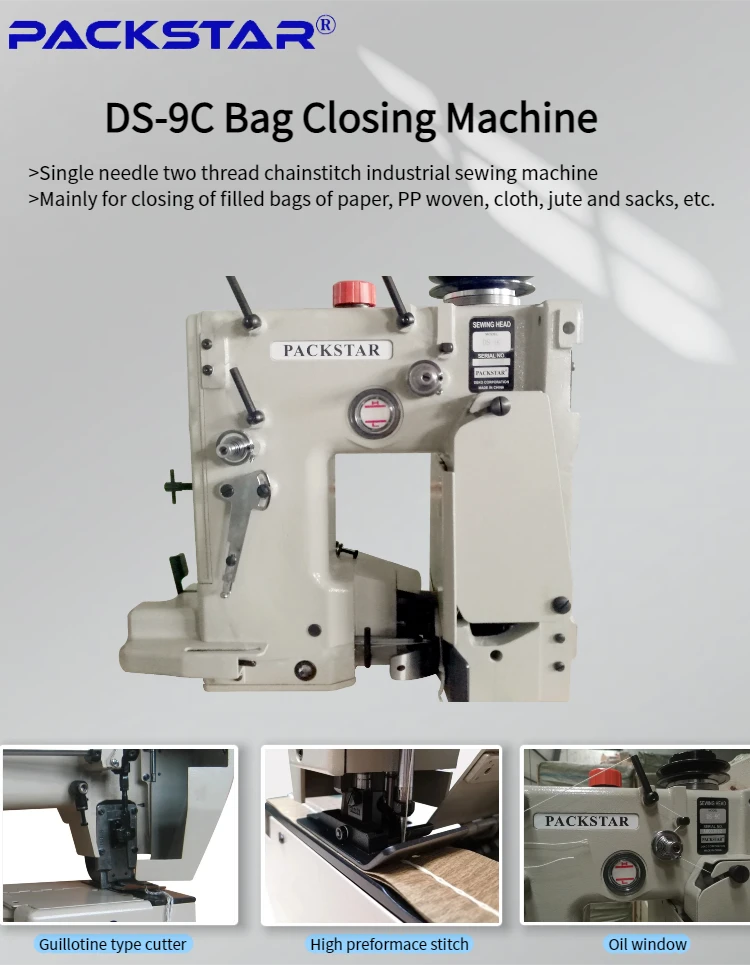
A sewing head bag closer is different from a domestic sewing machine. It is an industrial bag closing machine designed to sew filled sacks, woven bags, paper bags, and similar packaging at production speed. Our bag closing machines range includes the DS 9C single needle high speed bag closing machine, single needle bag closing machine without cutter, and sack bag closing machine. These can be reviewed as options when matching a sewing head to your bag type and line speed.
What Is a Sewing Head on a Bag Closing Machine?
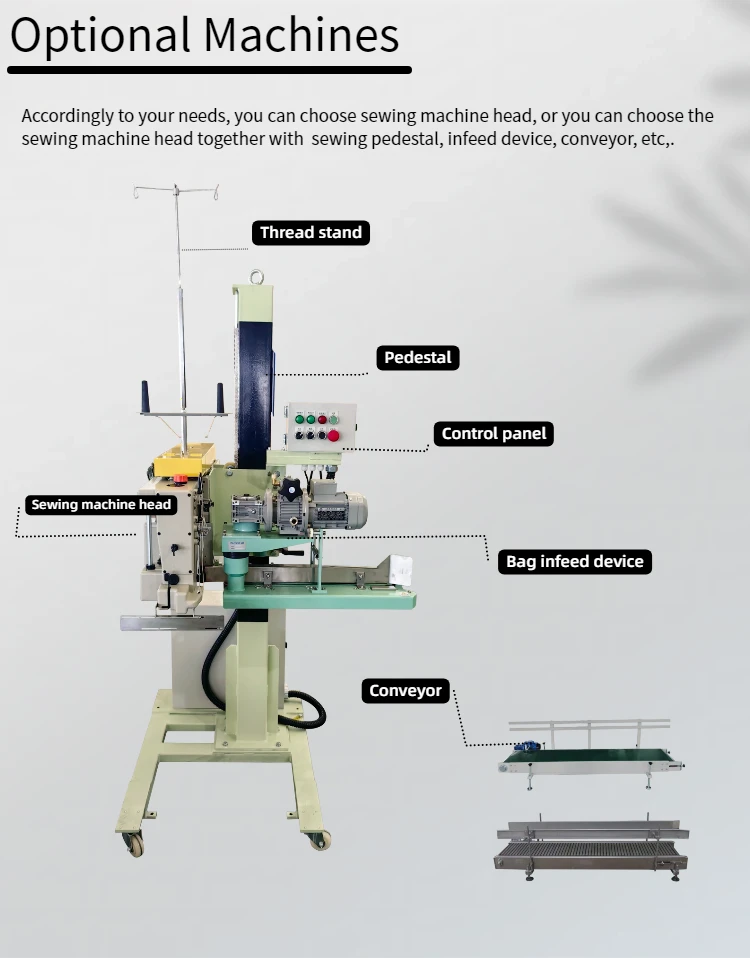
A sewing head is the sewing unit that feeds the bag top, guides the fabric or paper edge, and forms the stitch. On a bag closing machine, the sewing head is usually mounted on a stand, column, or conveyor frame. The operator guides the filled bag into the head, and the machine pulls the bag top through the sewing zone.
Key parts usually include:
Needle and thread path - forms the stitch.
Feed dogs or feed mechanism - moves the bag top forward.
Guide or folder - keeps the bag edge aligned.
Presser foot - holds the material against the feed.
Cutter (optional) - trims the thread or bag top on some models.
Motor and control - foot pedal or automatic start/stop.
For buyers comparing equipment, "single needle" refers to the sewing configuration; "high speed" refers to production capability; and "without cutter" means the machine does not include a cutter, so the operator handles thread trimming separately. Confirm the exact stitch type, speed, voltage, and bag range with the supplier before ordering.
How to Close a Bag With a Sewing Head?
1. Prepare the bag and work area
Fill the bag to the target weight, remove wrinkles from the bag top, and align the two sides of the mouth. A clean, flat bag top feeds more consistently. Keep the work area free of loose thread, dust, and obstacles.
2. Check the sewing head before starting
Before production, check:
①Needle condition and correct installation
②Thread path and thread tension
③Bobbin or looper condition if applicable
④Guide alignment
⑤Lubrication according to the manual
⑥Power supply, grounding, and emergency stop
⑦Guard and safety devices
3. Set the bag top into the guide
Hold the bag upright and insert the bag top into the sewing head guide. Keep the bag edge against the guide so the stitch line stays parallel to the bag mouth. Do not force a thick or twisted bag top into the head.
4. Start and feed evenly
①Start the machine with the foot pedal or control switch.
②Let the feed mechanism pull the bag through.
③Support the bag lightly with your hands, but do not pull it faster or slower than the machine feed.
④Pulling can bend the needle, change stitch length, or cause an uneven seam.
5. Finish the seam
When the bag reaches the end, stop the machine according to the operating procedure. If the model has a cutter, use it as designed. If it is a bag closing machine without cutter, trim the thread tail with a safe thread cutter. Leave enough thread tail if your downstream handling requires it.
6. Inspect and stack
Check the seam for skipped stitches, loose tension, holes, or missed bag edges. Stack or convey the closed bag to the next process. If rejects appear, stop and recheck needle, thread, tension, and guide settings.
How to Choose the Right Bag Closing Machine?
Use these questions to narrow the selection:
| Question | Why it matters |
|---|---|
| What bag material? | Woven PP, jute, paper, cotton, and composite bags behave differently. |
| What bag thickness and weight? | The sewing head and feed system must handle the filled bag top. |
| Do you need a cutter? | A cutter can improve line speed; a without-cutter model may suit simpler workflows. |
| What speed do you need? | Match the sewing head to your filling and handling rate. |
| Single needle or other configuration? | Confirm stitch appearance and seam requirements. |
| What voltage and plug? | Important for export markets and local installation. |
| What spare parts and manuals? |
Ask about needles, guides, belts, and language options. |
Safety and Maintenance Tips
①Disconnect power before changing the needle or clearing a jam.
②Wear eye protection and avoid loose clothing near the sewing head.
③Keep hands away from the needle and feed area during operation.
④Clean dust and fiber from the sewing head regularly.
⑤Follow the manual for lubrication and tension adjustment.
⑥Replace bent needles and worn guides promptly.
⑦Train operators to stop the machine immediately if the seam becomes uneven.
FAQ
1.Can a sewing head close woven bags?
Yes. A bag closing machine with a sewing head is commonly used for woven bags, sacks, and similar packaging. Confirm the correct needle, thread, and guide for your bag material.
2.Do I need a bag closing machine with a cutter?
Not always. A cutter can help trim thread or bag top, but a machine without cutter can work if your process includes manual trimming. Choose based on speed, operator workflow, and bag type.
3.What stitch does a bag closing machine use?
Stitch type varies by model. Ask the supplier to confirm the stitch formation and provide a sample seam for your bag material.
4.How do I adjust the seam if it is loose or skipped?
Check thread tension, needle condition, thread path, and guide alignment. Test on waste bag material before restarting production.
5.Where can I find bag closing machine options?
Review the bag closing machines product page and confirm the model, voltage, cutter option, and spare parts with us.
To contact us:
WhatsApp/WeChat:008613991289750/008618192599526
Email: sales@chinapackstar.com


