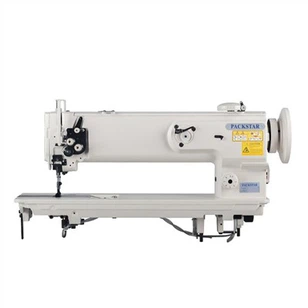

Summary Of Common Faults Of Sewing Machines(1)
Sewing machines must have encountered minor faults. Have you tried to find the root cause of the problem many times?
After reading this article, common minor faults of sewing machines will no longer be difficult for you!!!
Sewing machine maintenance faults (I)-Feeding faults
(1)Wrinkled sewing material
Analysis: Broken needle tip, excessive tension of the bottom line, improper adjustment of the differential mechanism.
Solution: Replace the new needle, loosen the shuttle spring screw, and readjust the differential mechanism.
(2)The bottom of the sewing material is "gnawed" to form a tooth mark
Analysis: The feed tooth tip is too sharp and the presser foot pressure is too high.
Solution: You can use an oilstone to grind the feed tooth tip and loosen the presser foot pressure adjustment screw.
(3)There are thread hairs under the sewing material, and there is a sound of breaking fibers when sewing
Analysis: The needle tip is broken or too blunt.
Solution: Replace a brand new needle.
(4)The sewing material stagnates
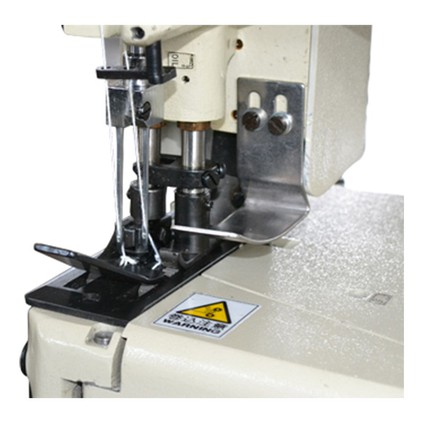
Analysis: The feed tooth is too low and the presser foot pressure is too high.
Solution: Raise the feed dog and tighten the pressure adjustment screw
(5)The sewing material moves back and forth
Analysis: The feed dog is too high.
Solution: Adjust the feed dog.
(6)The sewing material cannot be sewn backwards
Analysis: The feed cam is displaced.
Solution: Adjust the position of the feed cam.
(7)The sewing material moves irregularly
Analysis: The feed dog is crooked or the feed dog screw is loose.
Solution: Correct the feed dog and tighten the feed dog screw.
2.Sewing machine maintenance failure (II)-Operational failures
(1)The machine head is sluggish
Analysis: The wrong lubricant is added, especially vegetable oil; there is too much dirt in the shuttle bed; the connecting rod screw and cone screw are installed too tightly.
Solution: After flushing with kerosene, refill the sewing machine oil; clean the shuttle bed; loosen the screw to ensure its clearance.
(2)When feeding, half a circle is stuck, half a circle is lightly slipped, or there is a sticking point for each turn
Analysis: There is a thread head on the inner wheel of the shuttle bed. When running, it not only stagnates half a circle but also has violent shaking and noise; the feed dog is too high or dirt accumulates in the gap between the teeth, causing the feed dog to collide with the needle plate when it rises.
Solution: Clean the shuttle bed and add a little sewing machine oil; clean or lower the feed dog; replace or straighten the needle bar.
(3)The machine head is stuck and cannot move
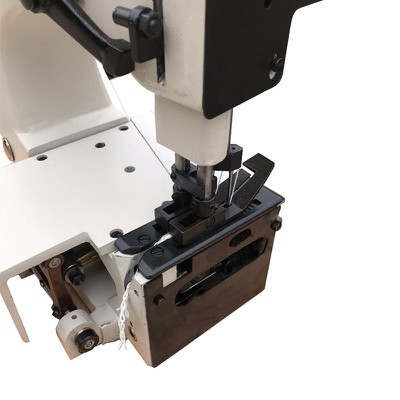
Analysis: The feed dog is too far forward or too far back, hitting the needle plate; the needle bar is installed too high, and the needle clamp hits the machine housing.
Solution: Adjust the feed dog position, re-align the needle, and adjust the needle bar height.
(4)The noise comes from the needle mechanism
Analysis: The needle bar, needle bar sleeve, small connecting rod, etc. are worn and the feeding is too large; the small connecting rod screw and needle bar crank screw are loose.
Solution: Replace new needle bar, needle bar sleeve, small connecting rod and other accessories; re-tighten the small connecting rod screw, and the needle bar crank screw is loose.
(5)Noise comes from the feeding mechanism
Analysis: The large pointed cone screw is worn or loose, the feed tooth hits the needle plate, and the stitch adjustment mechanism is loose.
Solution: Grind or readjust the large pointed cone screw, readjust the feed tooth to hit the needle plate, readjust or tighten the stitch adjustment mechanism screw.
(6)General noise
Analysis: The upper shaft, lower shaft and sleeve are worn, causing the upper and lower shafts to move; or the machine is short of oil.
Solution: Replace the new upper shaft, lower shaft and sleeve, or adjust the gap between the upper and lower shaft planes, pay attention to maintenance, and add lubricating oil on time.
3.Sewing machine maintenance failure (III)-Stitching failures
(1)The stitch length is sometimes long and sometimes short
Analysis: The pressure of the presser foot is too small.
Solution: Tighten the pressure adjustment screw.
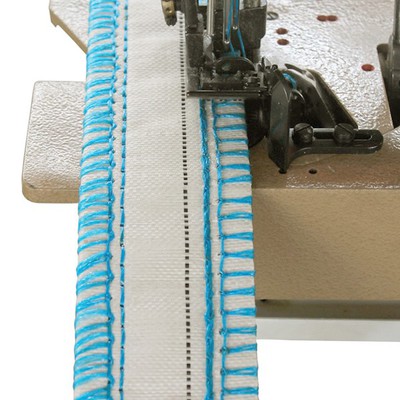
(2)There is a thread loop under each stitch of the sewing material, which is like a towel thread loop.
Analysis: The cloth feeding and thread picking actions are not consistent.
Solution: Adjust the cloth feeding cam screw to make the cloth feeding and thread picking actions harmonious and consistent.
If you have any assistance from us, please kindly contact us,
WhatsApp/WeChat: 008613991289750 /0086 13891858261
Email: sales@chinapackstar.com.