

Selecting the right industrial filter bag sewing machine in 2026 is essentially a systematic exercise in precisely matching production requirements, material characteristics, equipment parameters, and return on investment. The following step‑by‑step process analysis will guide you through every critical stage.
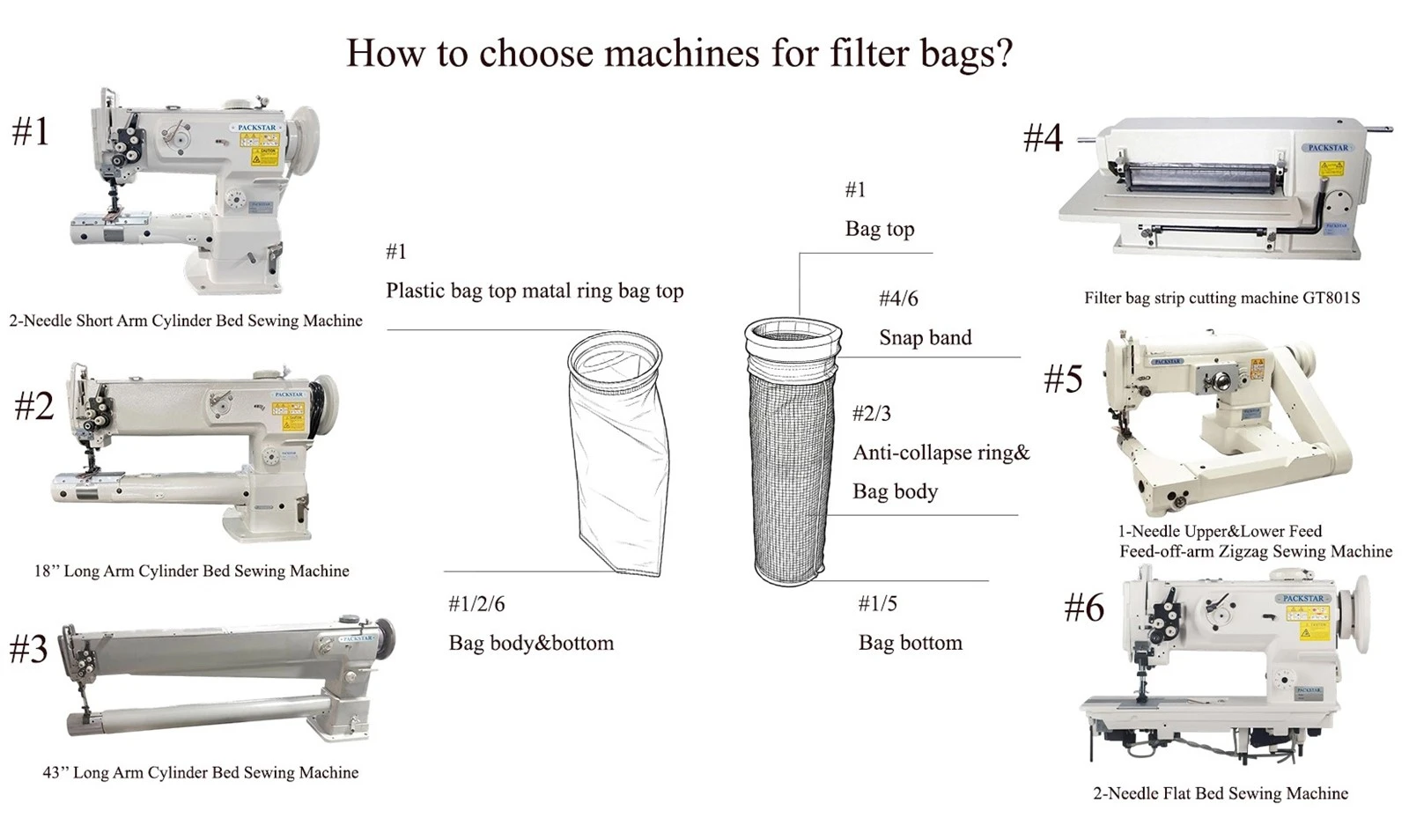
Step 1: Define Your Production Needs and Material Properties
The selection process begins with a clear understanding of your own requirements. Answer these core questions first:
1. What is the filter bag material?
Filter bags are made from a wide variety of materials – polyester, polypropylene, Nomex, PTFE needled felt, and even fibreglass. The physical properties of these materials differ enormously. A machine that sews standard needled felt smoothly may struggle with PTFE. For fibreglass or very heavy felt, you need a model with high‑torque motors, adjustable presser‑foot pressure, etc.
2. What is your production batch size?
Small‑batch, high‑mix production has completely different requirements from large‑volume continuous runs. High‑volume production demands high‑speed models (upwards of 5,000 rpm), while small‑batch operations prioritise flexibility and quick changeover.
3. What are the filter bag styles and dimensions?
Filter bags come in cylindrical, multi‑layer, and other configurations. If you produce large‑diameter dust collector bags (flat width from 300 mm to 600 mm), long‑arm machines (36‑inch or longer) are essential – a standard 22‑inch arm will make the work extremely difficult.
Step 2: Choose the Correct Machine Type
| Machine Type | Application | Key Feature |
|---|---|---|
| Cylinder‑bed machine | Cylindrical or 3D‑shaped filter bags | 360° rotating hook structure, ideal for handling round seams |
| Twin‑needle machine | Double parallel stitching for extra strength | Suited for bag bottom and mouth sewing |
| Long‑arm machine | Large‑diameter or long filter bags | Arm length up to 800 mm or more, handles wide materials easily |
| Walking‑foot (feed‑dog) machine | Heavy, multi‑layer materials | Ensures even feeding of multiple layers, prevents shifting |
Step 3: Consider Maintenance, Operation, and Spare Parts
1.Hook and Bobbin
Filter‑bag sewing environments are often dusty (cement, carbon black, fine powders). Choose a large‑capacity bobbin to reduce replacement frequency. Some high‑end models feature extra‑large vertical rotary hooks that significantly reduce downtime.
2.Standardisation of Parts
Choose machines that use widely available needle systems and standard bobbins – this avoids the nightmare of "no spare parts available at midnight".
3. After‑sales Service
Verify that the manufacturer can provide reliable spare‑parts supply and technical support – this is a key guarantee for long‑term investment.
Step 4:On‑site Testing – The Most Important Step
"Never make a decision based on specification sheets alone."
Before your final decision, you must:
Bring your own filter‑bag material for testing (stack 2–3 layers).
Sew a sample section and check for skipped stitches.
Check needle heating – synthetic materials may melt at high speed.
If you need further details on any specific section or a comparison table of specific models, feel free to contact us,
To contact us:
WhatsApp/WeChat:008613991289750/008618192599526
Email: sales@chinapackstar.com


