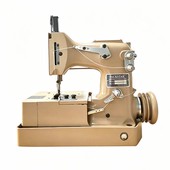
To choose the right big bag sewing machine for your production, you need to match the machine to your bag design, material, seam type, volume, and support needs-not just buy the cheapest or heaviest machine.Here's a practical selection framework for FIBC / big bag production.
Define the sewing operations
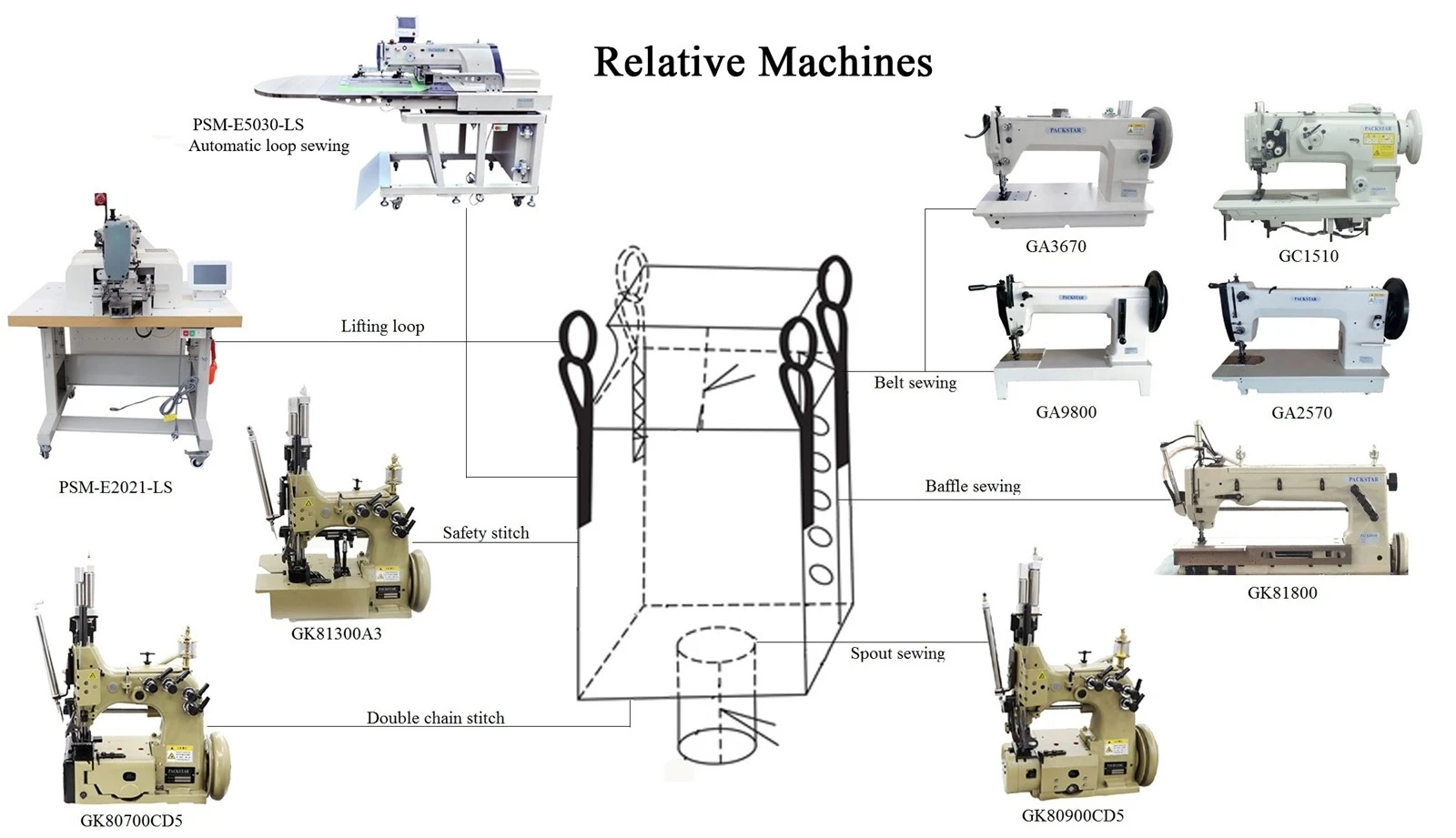
Big bag production is not one sewing job. List every operation you need:
Top / bottom closing :usually single- or double-needle chainstitch.
Body / tubular seams: often cylinder-arm or long-arm heavy-duty machine.
Baffle sewing : cylinder arm with good access.
Lifting loop attachment :high-post or post-bed machine with high presser foot lift.
Spout / filling / discharge sewing : post-bed or high-post machine.
Edge binding / hemming : flat-bed machine with folder.
Patches / labels: heavy-duty lockstitch or chainstitch.
High-volume integrated line: – automatic folding, sewing, cutting, stacking.
If you only close already-made woven bags, a portable or stationary bag closer may be enough. If you manufacture FIBC from scratch, you need heavy duty industrial machines for different stations.
Match the material and seam specification
Big bag materials are demanding: woven PP, laminated/coated fabric, multiple layers, webbing, and thick seams.
Check:
Fabric GSM and number of layers
Coating / lamination – can cause slippage and needle heat
Stitch type:
101 single-thread chainstitch – common for bag closing
401 double-thread chainstitch – strong, secure, common for FIBC seams
301 lockstitch – patches, straps, some loop work
504 overedge – edge finishing
Stitches per inch / stitch length – usually 4–6 SPI for heavy PP, but confirm your seam spec.
The machine must handle your thickest, most layered seam at production speed without skipped stitches or ply shift.
Choose the right bed and arm configuration
The machine's shape determines what you can sew.
| Machine type | Best for | Notes |
|---|---|---|
| Flat bed heavy duty | Patches, labels, general sewing | Limited for tubular bags |
| Cylinder arm | Body seams, baffles, tubular work | Good access inside bags |
| Post bed / high post | Loops, corners, spouts | High lift and clearance |
| Long arm | Large bag panels, long seams | Reduces bunching |
| Double needle chainstitch | Top/bottom, body seams | High strength, parallel seams |
For FIBC, walking foot / triple feed / unison feed is often important to prevent layer slippage.
Size the machine for your bag
Key specs to verify:
Throat height / arm length – must clear bulky bag sections
Needle bar stroke – enough penetration force
Bobbin / thread capacity – larger is better for high volume
Max speed – heavy material needs low-speed, high-torque performance
Do not assume a high-speed machine will sew thick FIBC seams well. Heavy-duty usually means slower but more powerful.
Match production volume and automation
Low volume / job shop: portable bag closer or basic heavy-duty stationary machine.
Medium volume: servo-driven heavy-duty machine with needle positioning, auto trim, and backtack.
High volume: double-needle chainstitch, automatic thread trimmer, pneumatic presser foot lift, edge guide, folder, puller, stitch counter, and possibly a full automated FIBC line.
Automation improves consistency and reduces operator fatigue, but only if it fits your bag style.
Evaluate total cost of ownership
Look beyond purchase price:
Needles, thread, spare parts
Power consumption
Maintenance and downtime
Operator training
Local dealer support and parts availability
Warranty and service response
A cheaper machine with no local support can cost far more in lost production.
Always test with your own materials
Before buying, send the supplier:
Your fabric samples
Thread and webbing
Your seam drawing / stitch type
Target stitches per inch
Speed and layer requirements
Ask for a sewn sample and test:
Stitch formation
Seam strength
Ply slippage
Needle heat
Operator fatigue
Speed and consistency
Choose a big bag sewing machine by starting with your seam specification and thickest material, then match the stitch type, feed system, bed shape, lift, and arm clearance. For serious FIBC production, prioritize a heavy duty chainstitch or double needle machine with walking/triple feed, high presser foot lift, servo motor, and strong local support. Always demand a trial on your own fabric before committing.
To contact us:
WhatsApp/WeChat:008613991289750/008618192599526
Email: sales@chinapackstar.com