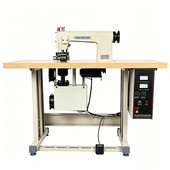
Industrial sewing machines play an important role in the manufacturing industry. They are used to sew a variety of materials including fabric, leather, and vinyl. Owning an industrial sewing machine requires proper maintenance to ensure long life and efficient performance. In this article, we will explore some tips on how to care for your industrial sewing machine and keep it in good condition.

A schedule for cleaning machines
Firstly, it is crucial to have a schedule for cleaning your machine. This will save you time and money in the long run as regular maintenance will extend the life of the machine. A typical cleaning schedule should include wiping it down with a clean damp cloth once a week to remove any loose threads or lint that may have accumulated around the bobbin area and needle plate. In addition, it is recommended to disassemble and clean any parts that can be easily unscrewed, such as the throat plate and presser foot, to ensure that no debris or thread buildup occurs.
Key cleaning areas:
① Around the needle (wipe the needle bar)
② Around the hook (clean around the hook)/around the looper (clean around the looper)
③ Around the thread cutter (cloth cutter) (clean the thread cutter mechanism)
④ Inside the oil pan (clean)
⑤ Wipe the entire machine (including the machine table) Wipe and clean
Note: The key cleaning areas are basically the same for machines of different models and shapes.
Lubricate the machines
Secondly, it is equally important to lubricate the machine correctly. Oil is a necessity for the smooth operation of the sewing machine, and frequent lubrication ensures the life of the machine. Industrial sewing machines usually need to be oiled every 8 hours of use. A few drops of oil should be dripped on moving parts and joints, such as the needle bar, hook, and presser foot lifting mechanism. Lubrication not only prolongs the life of the machine, but also improves its performance and makes sewing easier.
Adjust the amount of lubricating oil in key parts
A. How to adjust the oil supply of the sewing machine hook (be sure to turn off the power)
1. Lift the presser foot and let the shuttle idle for more than 30 seconds.
2. Place a test paper such as copy paper under the shuttle every 5 seconds. Do not let the paper move during measurement. Also, be careful not to let your fingers touch the high-speed rotating shuttle.
3. At this time, a linear oil mark will be left on the paper. The width of the oil mark can be used to determine whether the oil amount is appropriate.
The width of the oil mark is normal within 1~2mm. Depending on the sewing product, the amount of oil may increase or decrease, but if it decreases too much, the shuttle will burn when the machine runs at high speed. Please pay attention.
B. About the oil core of the lower shaft fixing screw
When the adjustment screw cannot adjust the oil amount, it may be that the oil core of the lower shaft fixing screw is blocked by garbage, etc. At this time, the shuttle needs to be removed, the oil core cleaned or replaced with a new one. In addition, since the lower shaft fixing screw is made of soft material, please pay attention when installing.
C. Adjust the oil amount of the machine head
The surface oil amount generally does not need to be adjusted, but in the case of low oil supply or severe oil precipitation, please adjust it in the following order. Remove the panel and adjust the oil level by rotating the oil level adjustment pin located on the upper shaft. This part is not a screw, but a pin that can be rotated. When the oil does not come out of the adjustment face, there may be a problem with the oil supply device from the oil pump to the face. In addition, if there is too much oil sediment on the bottom of the face, there may be a problem with the circulation mechanism from the face to the circulation pump.
Properly storing sewing machines
Third, properly storing your sewing machine is another important aspect of maintenance. When not in use, cover the machine to protect it from dust and moisture. Store it in a cool and dry place away from direct sunlight and heat sources. In addition, make sure the bobbins and spools are empty to avoid unnecessary strain on the machine's mechanism.
A qualified technician
Finally, consider investing in a qualified technician to service your machine regularly. A professional can spot potential problems early before they become bigger issues. They can also carry out necessary repairs and maintenances that may require expertise and specialized tools.
In conclusion, proper maintenance of an industrial sewing machine is essential for improved productivity, extended lifespan, and optimal performance. Cleaning and lubricating your machine regularly, proper storage, and getting a professional to service your machine can go a long way in making your investment worthwhile. With these tips, you can be sure to have your sewing machine performing at its best for years to come.
To contact us:
WhatsApp/WeChat: 0086 13991289750/0086 13891858261
Email: sales@chinapackstar.com